Platform · Family
Mira™ for families.
A bilingual family portal that reduces the phone burden on your team — and helps families feel held during the most important seasons of their lives.
The family is part of the care team. The portal treats them that way.
When a family member's loved one is in hospice, the questions never stop. What did the nurse say at Tuesday's visit? What medications is she on right now? When is the next visit? Is there anything we need to sign? These are not unreasonable questions — they come from love, from fear, from wanting to be present in a situation that feels overwhelming and beyond their control.
The Mira™ family portal gives families a place to find those answers without calling the office. Care team members spend less time on the phone answering status questions — and more time with patients. Families feel informed and connected, not kept at a distance from the care their loved one is receiving.
The portal is fully bilingual: English and Spanish, without any translation lag or degraded experience. Families who are most comfortable in Spanish receive the same complete, fluent interface — not a rough machine-translated fallback. And when a family member needs to ask a question that isn't covered by the portal's structured views, the AI chatbot is there — grounded to the patient's actual care record, not the open internet.
What families can do in the portal
- ✓ View the care timeline — scheduled visits, completed visits, care plan updates
- ✓ Ask questions in English or Spanish — AI chatbot grounded to the patient record
- ✓ Sign consent forms with a canvas signature — no printer, no fax
- ✓ Access bereavement support resources after the patient's discharge
- ✓ Receive proactive updates from the care team without phone tag
What it means for the care team
- → Fewer inbound status calls — families self-serve from the portal
- → Consent forms completed faster — no tracking down signatures by fax or in person
- → Family engagement documented in the care record — visible during IDG prep
- → Bereavement compliance covered — 13-month post-discharge tracking built in
- → No separate app to maintain — family portal lives inside the Mira™ platform
English and Spanish — the same experience, not a translation workaround.
The family portal was built bilingually from the start. That's a meaningful distinction. A portal built in English and then translated is a different product — one where Spanish speakers encounter awkward phrasing, missing idioms, or UI flows that assume English-language mental models. The Mira™ family portal presents both languages as first-class experiences.
Families set a language preference when they first log in. The entire interface — navigation, care timeline, visit summaries, consent forms, chatbot responses — follows that preference. A Spanish-speaking family member who receives an invite link lands directly in the Spanish interface. There is no language selection screen to navigate past, no "click here for Spanish" buried in a settings menu.
For hospice organizations serving Spanish-speaking communities, this is not a nice-to-have. It is the difference between a family member who feels informed and one who calls the office to ask the same questions in every visit cycle.
- – Full UI in both locales — not machine-translated strings appended to an English base
- – Language preference set at invite; switchable at any time without logging out
- – Care timeline, visit notes, consent forms, and chatbot responses all respect locale
- – SMS invite and magic-link login work in both languages
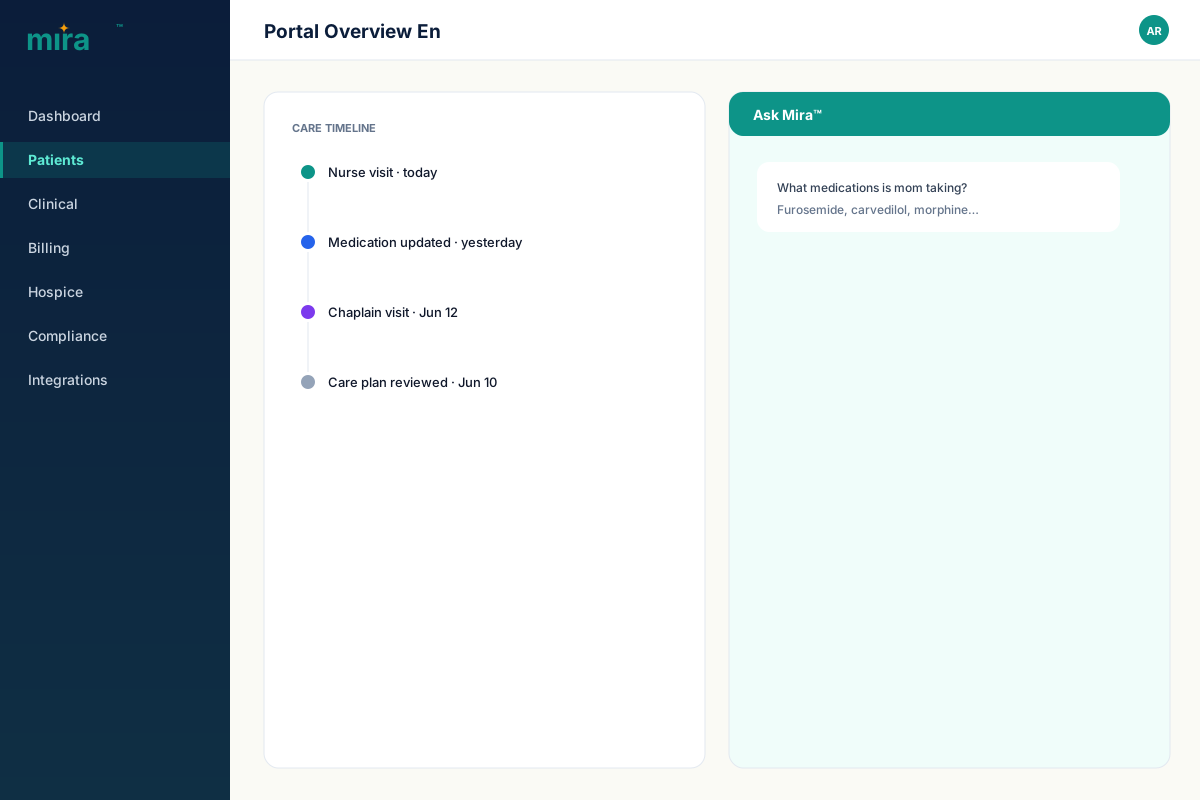 Mira product screenshot with numbered annotations. 1
 - 1 Care timeline at a glance.
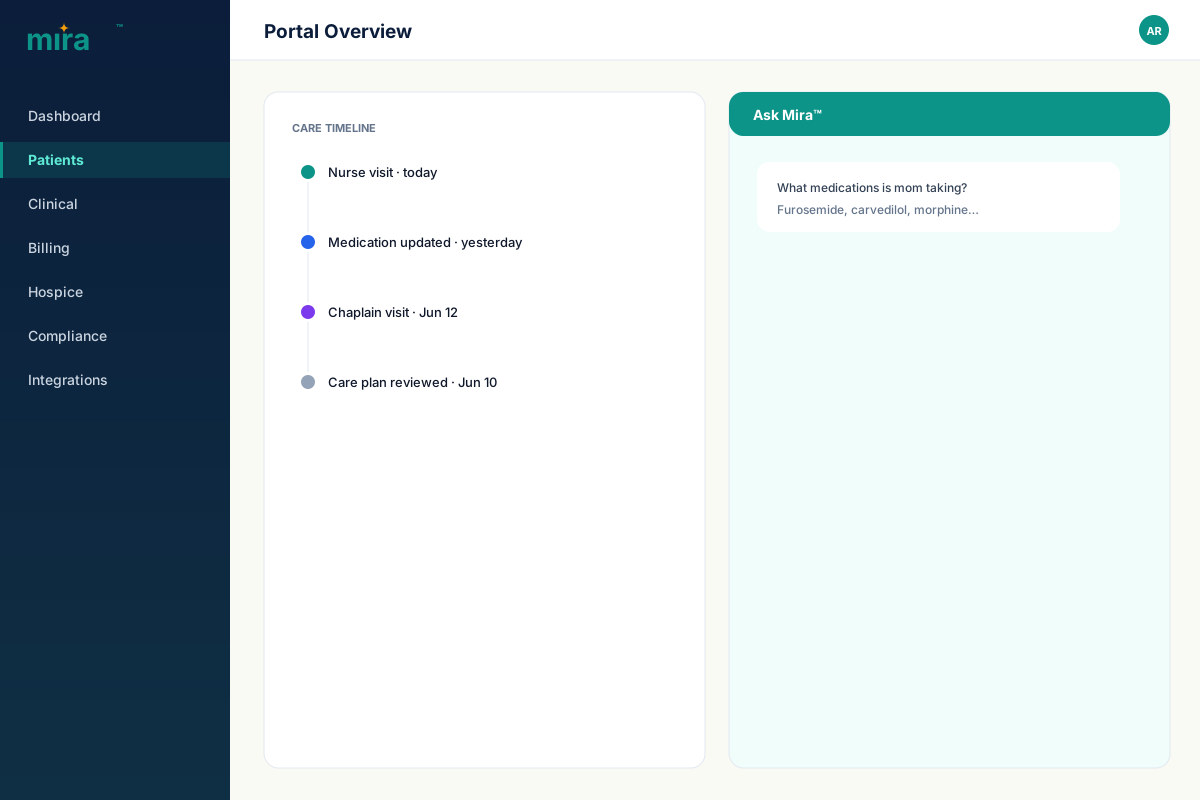 Mira product screenshot with numbered annotations. 1
 - 1 Same UI, Spanish locale. No translation lag.
Same UI, two languages — no translation lag.
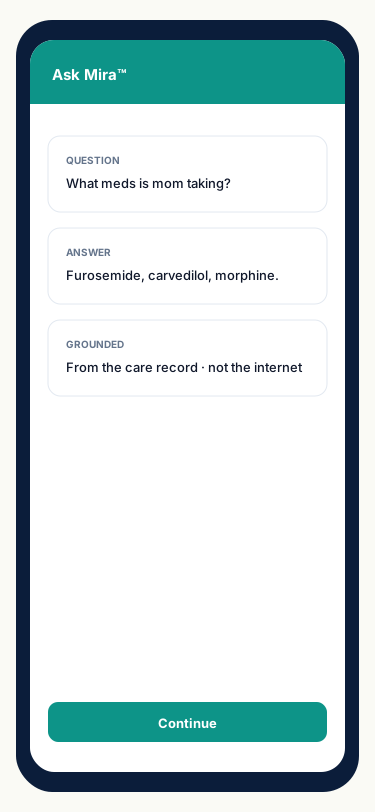 Mira product screenshot with numbered annotations. 1
 - 1 Grounded in the patient's care record. Never the internet.
An AI that knows this patient. Not a chat window connected to the open internet.
The family-portal chatbot is grounded to the patient's care record. When a family member asks "what medications is my father currently on?" — the AI reads the active medication list from the Mira™ record and answers with the real current medications. When they ask "when is the next scheduled visit?" — it reads the visit calendar. The answers are specific because the data is specific.
This matters in a hospice context more than almost any other. A family member asking about their loved one's care is not looking for general health information. They are trying to stay close to someone who is dying. A chatbot that deflects with "I recommend consulting your care team" is not comforting — it's another wall between the family and the information they need. Mira™'s chatbot answers when it has the answer, because the answer is in the care record.
The query scope is enforced server-side per authenticated family member. Each family member can only ask about the patient they are linked to. No family member can access another patient's data by asking a different question. The system is scoped, not trusted.
- – Grounded to the patient's care record — care plan, visit notes, medication list, schedule
- – Bilingual EN+ES — responds in the language the question is asked in
- – Query scope enforced server-side per authenticated family member
- – Thumbs up/down feedback per response; aggregate ratios visible to admin
- – Conversation history preserved within session — not retained across sessions
Consent completed in the portal — no paper, no scanning, no chasing.
Consent forms are among the most operationally painful documents in hospice care. They need to be signed before care begins, updated when the care plan changes, and re-signed when the patient or family contact changes. Historically this has meant printing, delivering, collecting, scanning, and filing — a cycle that can delay care and frustrate families who are already managing tremendous stress.
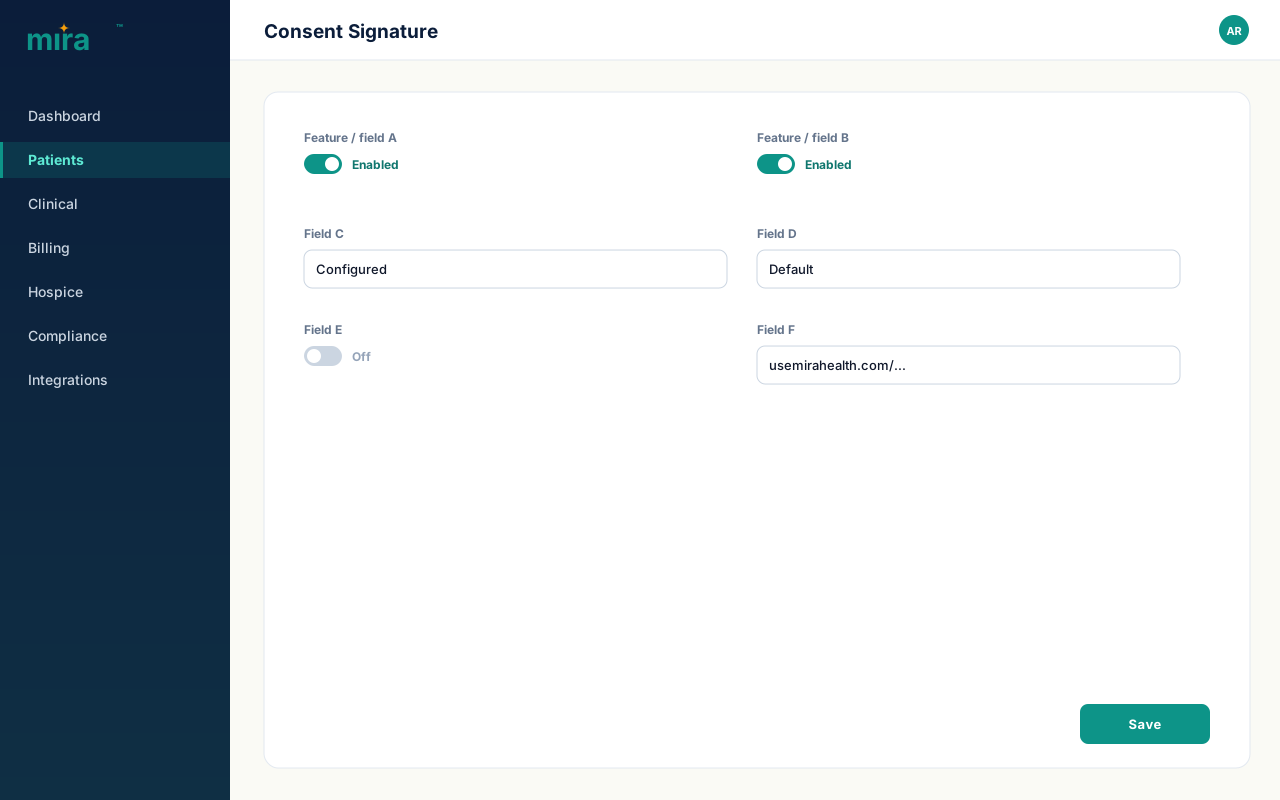
The Mira™ family portal replaces that cycle with an in-browser canvas signature. The family member reads the consent form, draws their signature directly in the portal on any device, and submits. The signature is stored as a PNG image in the patient record — captured inline with a 200 KB server-side size cap, linked to the form, the signing user, and the timestamp. No separate document management system needed.
The signed consent is immediately visible to the care team. There is no waiting for a fax to arrive, no calling to confirm a document was received, no manual filing step. The audit trail is built in: who signed, when, from which form version.
- – In-browser canvas signature — works on phone, tablet, or desktop with any pointer device
- – Signature stored as PNG in the patient record, linked to the form version and signing user
- – Immediately visible to the care team — no fax lag, no manual filing
- – Full audit trail: signer, timestamp, form version
- – Consent forms available in both English and Spanish
 Mira product screenshot with numbered annotations. 1
 - 1 Inline canvas signature. PNG stored with 200 KB cap.
Screenshot: bereavement timeline — 13-month post-discharge tracking
The relationship doesn't end at discharge. Neither does Mira™'s support.
Federal hospice regulations require bereavement services for family members for at least 13 months following a patient's death. For many hospice teams, tracking compliance with that requirement falls to a spreadsheet, a manual calendar reminder, or — too often — nothing at all until a surveyor asks. The burden of maintaining that follow-up over more than a year, across hundreds of families, is real.
Mira™'s bereavement workflow is built into the care record from the moment of intake. When a patient is discharged, the bereavement timeline begins automatically — with scheduled touchpoints, outreach logging, and a clear dashboard showing which families are within their 13-month window and which have been reached. The care team doesn't need to remember to start a process; the system tracks it from discharge forward.
The bereavement module is also where the family portal extends beyond the patient's life. Families retain access to resources and support materials in the portal after discharge — a small but meaningful gesture that honors the relationship the care team built with them.
- – 13-month tracking window starts automatically on patient discharge
- – Scheduled outreach touchpoints with completion logging per family
- – Dashboard shows families in-window, overdue, and completed
- – Family portal access extended post-discharge for bereavement resources
- – Supports 42 CFR 418.58 QAPI bereavement compliance documentation
Walk the family journey in 50 seconds.
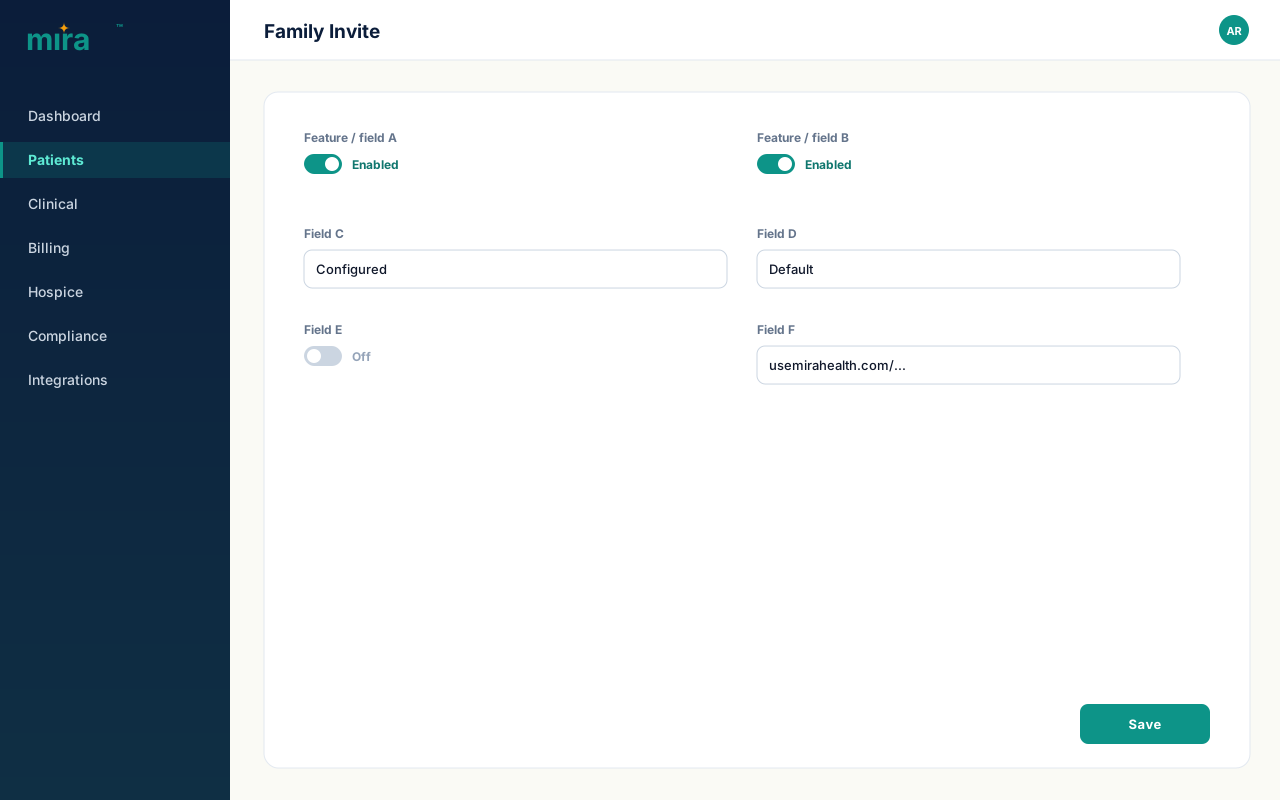
Invite → portal login → chat → consent signature → bereavement. Five steps. No narration needed.
Family invite
Care team invites a family member by email or SMS.
How family engagement connects to the rest of care.
Mira™ Clinical
The family portal reads from the same care record the clinical team writes to. Visit notes, care plan updates, and medication changes appear in the portal as soon as the clinician saves them — no manual data export, no delay.
Explore Clinical →Mira™ AI
The family chatbot is one of Mira™'s seven AI features. Like all of them: per-org opt-in, BAA-gated, audit-logged, and fail-closed. If the AI provider is down, the portal continues to work — families can still view the care timeline and sign consent forms.
Explore AI →See it with your families
Book a demo and we'll walk through the family portal with your organization's workflows in mind — the consent forms you currently chase, the languages your families speak, the bereavement compliance you need to document. 30 minutes, no slides.
Book a demo →Ready to give families a better way to stay close?
We'll show you the bilingual portal, the chatbot in both languages, and how the bereavement timeline tracks compliance so you don't have to. 30 minutes — bring your toughest family-engagement scenario.