Platform · Clinical
Mira™ Clinical.
Visits, care plans, meds, orders, referrals — purpose-built for hospice and home-health workflows. Mobile-first for the field.
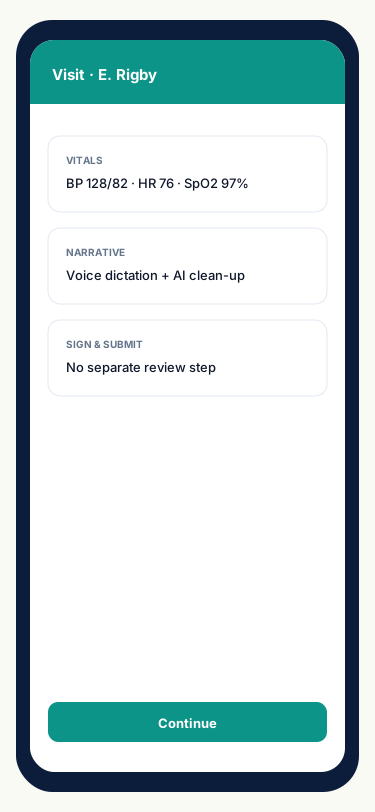 Mira product screenshot with numbered annotations. 1 2 3
 - 1 Vitals capture in under 30 seconds.
- 2 Inline narrative dictation with AI summarization.
- 3 Sign + submit — no separate review step.
Built for the clinical reality of hospice and home-health.
Most EHRs were designed for acute care, then stretched to fit post-acute settings with configuration and add-ons. Mira™ Clinical was scoped from day one around the specific workflows that define hospice and home-health: the mobile nurse charting at a patient's bedside, the multi-disciplinary team preparing for an IDG meeting, the prior-auth coordinator watching five payers at once.
Everything below — visits, care plans, meds, orders, referrals — lives in a single module with a shared patient record. No integration tax. No double-charting. One source of truth that billing, compliance, and the AI features all read from.
- ✓ Mobile-first visit documentation — vitals, narrative, signature in under 60 seconds
- ✓ Multi-disciplinary care plans with role-locked sections per clinician type
- ✓ Medication orders with inline PDMP check on every controlled substance
- ✓ Medication reconciliation history per patient, per drug
- ✓ Prior-auth status polled hourly across all active payers
- ✓ Auto-rebill triggered the moment an authorization approves
- ✓ Referrals inbox unifying phone, fax, and EMR imports
- ✓ One-click intake handoff to the billing module
Vitals, narrative, signature. Done before the nurse leaves the driveway.
Charting after hours is the single biggest driver of nurse burnout in home health. Mira™ flips the model: every field the nurse needs is on-screen in the right order, optimized for one thumb on a phone.
Vitals are entered with large tap targets. Narrative is dictated — the AI scrubs filler words and formats the SOAP note automatically. The nurse reviews, signs with a tap, and submits. The chart is locked and visible to the billing team within seconds.
- – Vitals capture in under 30 seconds — no scrolling between fields
- – Voice dictation with real-time AI clean-up and SOAP structuring
- – Offline mode: visits queue locally if signal drops mid-route
- – Sign + submit from a single screen — no separate review step
Mira product screenshot with numbered annotations. 1 2 3 - 1 Vitals capture in under 30 seconds.
- 2 Inline narrative dictation with AI summarization.
- 3 Sign + submit — no separate review step.
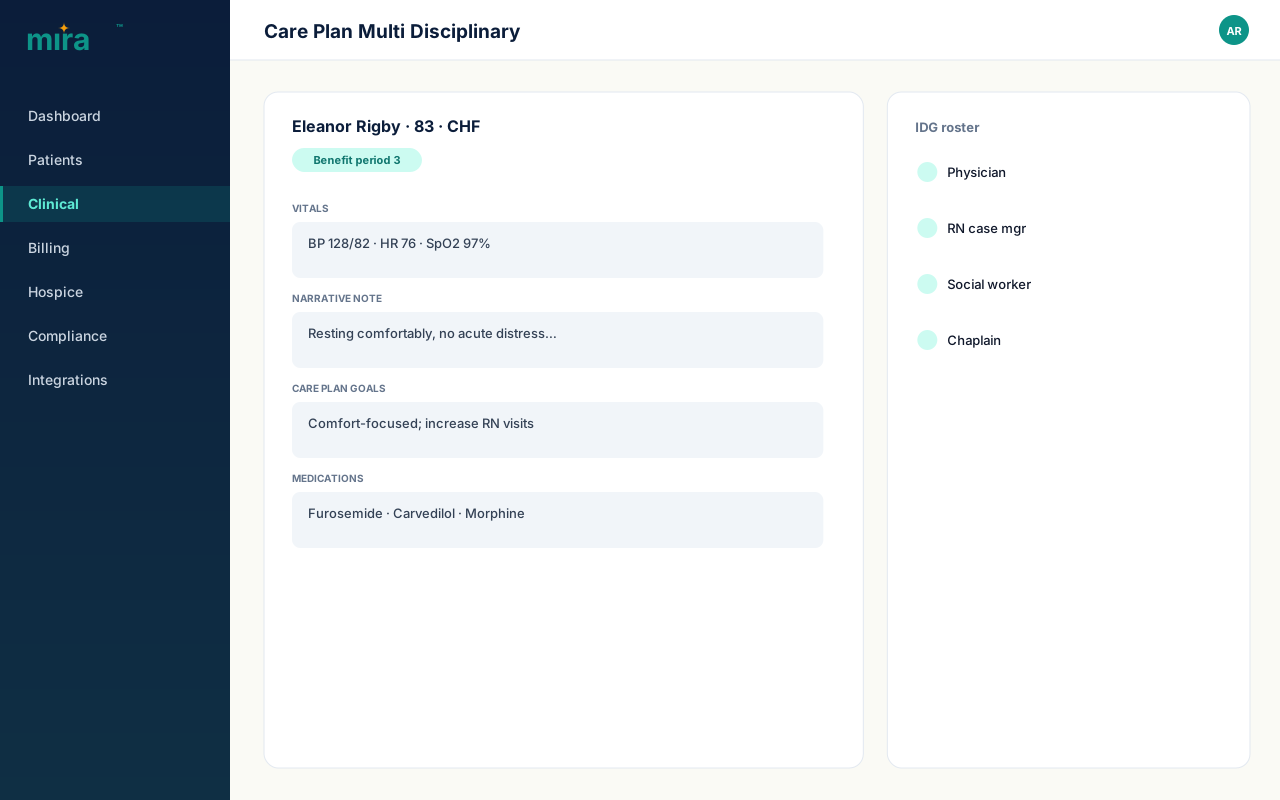 Mira product screenshot with numbered annotations. 1 2
 - 1 Role-locked tabs: physician, RN, social worker, chaplain.
- 2 Cross-role goals stay visible across the whole IDG.
One care plan. Four disciplines. Zero version conflicts.
The hospice care plan is a living document touched by physicians, RNs, social workers, and chaplains. In most systems, each discipline maintains a separate section in a separate workflow — and someone manually reconciles them before the IDG meeting.
Mira™ keeps all four disciplines in one document with role-locked sections. Physicians can't accidentally overwrite the chaplain's goals of care notes. The RN's comfort measures are always visible when the social worker writes the psychosocial plan. The IDG chair arrives to a pre-reconciled brief, not a stack of PDFs.
- – Role-locked sections: each discipline sees and edits only their own lane
- – Shared goals block visible to all roles simultaneously
- – AI-drafted IDG brief ready in 8 seconds when the meeting starts
- – Version history with per-discipline attribution
PDMP check inline. Reconciliation history per drug, per patient.
Controlled-substance management in hospice is high-stakes: a missed PDMP check or an unreconciled prior-to-hospice medication is both a clinical risk and a surveyor flag. Mira™ fires the PDMP lookup the moment a provider selects a controlled substance — no separate tab, no second login.
Reconciliation is tracked per medication. Every time a drug is reviewed, continued, modified, or discontinued, Mira™ records who did it and why. The reconciliation timeline is one click away from the medication order — useful at every IDG and indispensable during a survey.
- – Inline PDMP query — result returned before the order is saved
- – Supports Schedule II–V controlled substances across all 50 states
- – Reconciliation timeline with provider attribution and clinical rationale
- – Prior-to-hospice medication carry-over with one-click reconciliation prompt
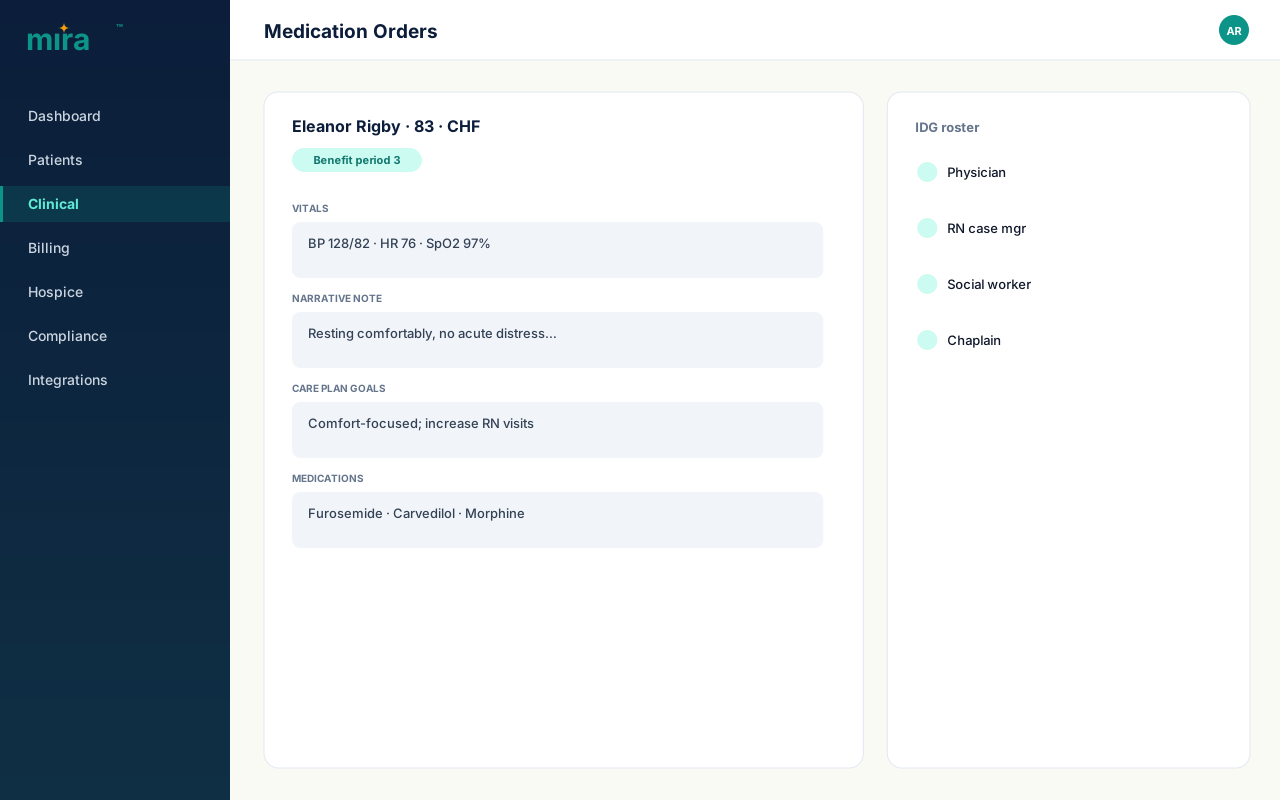 Mira product screenshot with numbered annotations. 1 2
 - 1 PDMP check fires inline on every controlled-substance order.
- 2 Reconciliation history per medication.
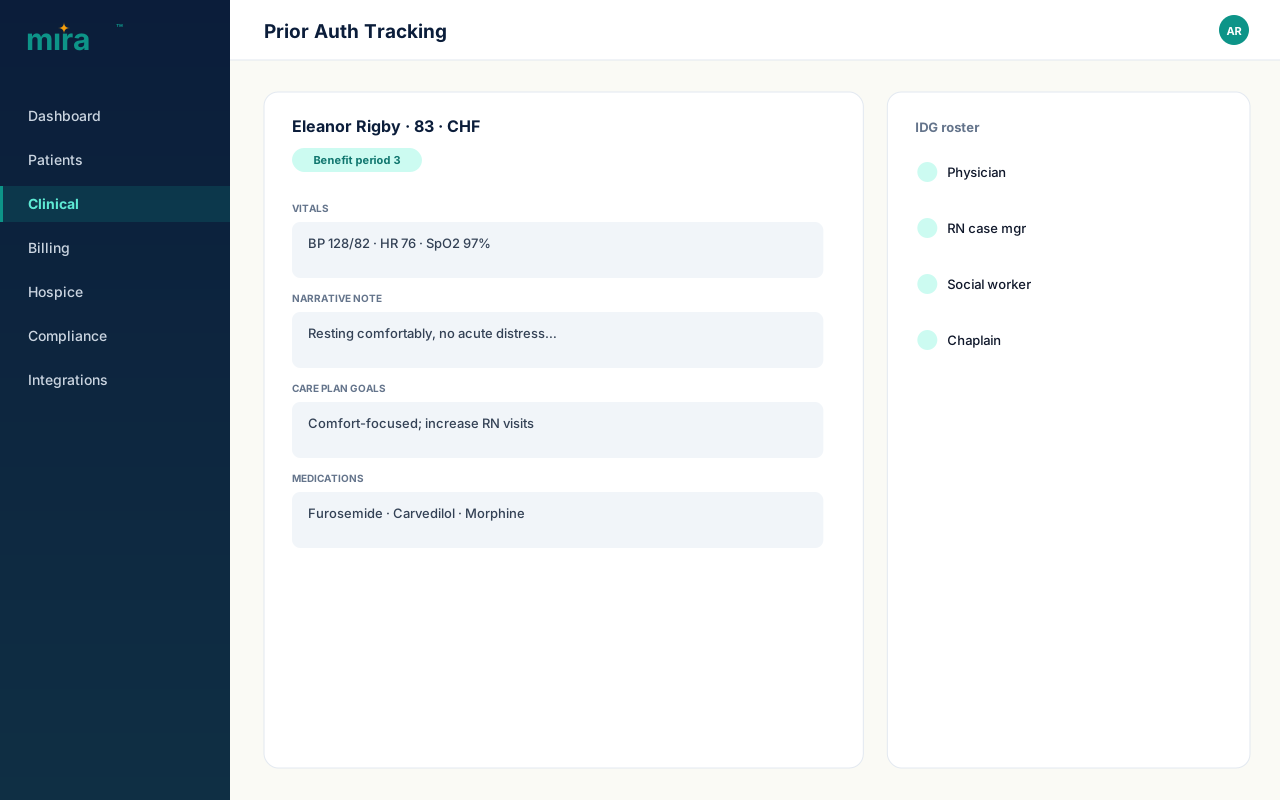 Mira product screenshot with numbered annotations. 1 2
 - 1 Status polled hourly across all submitted authorizations.
- 2 Auto-rebill once approval lands.
Every payer. Every pending auth. Status polled hourly — not when someone remembers to check.
Authorization delays are a leading cause of claim denials in home health. The coordinator who is supposed to check the payer portal daily is also scheduling visits, handling phones, and managing recertification deadlines. Things fall through.
Mira™ polls authorization status on a one-hour cadence across every payer that exposes a machine-readable status endpoint. When an approval lands, the billing module is notified automatically and the claim is queued for release. The coordinator gets notified — no daily portal check required.
- – Hourly status polling across all active authorization requests
- – Payer portal credentials stored per-org with encrypted vault
- – Auto-notification to billing when approval status changes
- – Manual override and notes field for payers without API access
Phone, fax, EMR — one inbox. Handoff to billing with one click.
Referrals arrive three ways simultaneously: phone call transcribed by staff, fax scanned and attached, and direct ADT feed from the hospital EMR. In most agencies these live in three places and someone consolidates them manually into a spreadsheet or the EHR's intake module.
Mira™ normalizes all three channels into a single inbox. Phone notes, fax attachments, and EMR demographic pulls are all visible on the same record. Once the intake coordinator confirms eligibility and signs off on the referral, a single click creates the patient record and notifies billing to open the insurance verification workflow.
- – Unified inbox: phone, fax, and HL7 ADT/FHIR EMR import on one screen
- – Auto-populated demographics from EMR — no re-keying
- – Eligibility check fired automatically on every new referral
- – One-click handoff creates the patient record and notifies billing
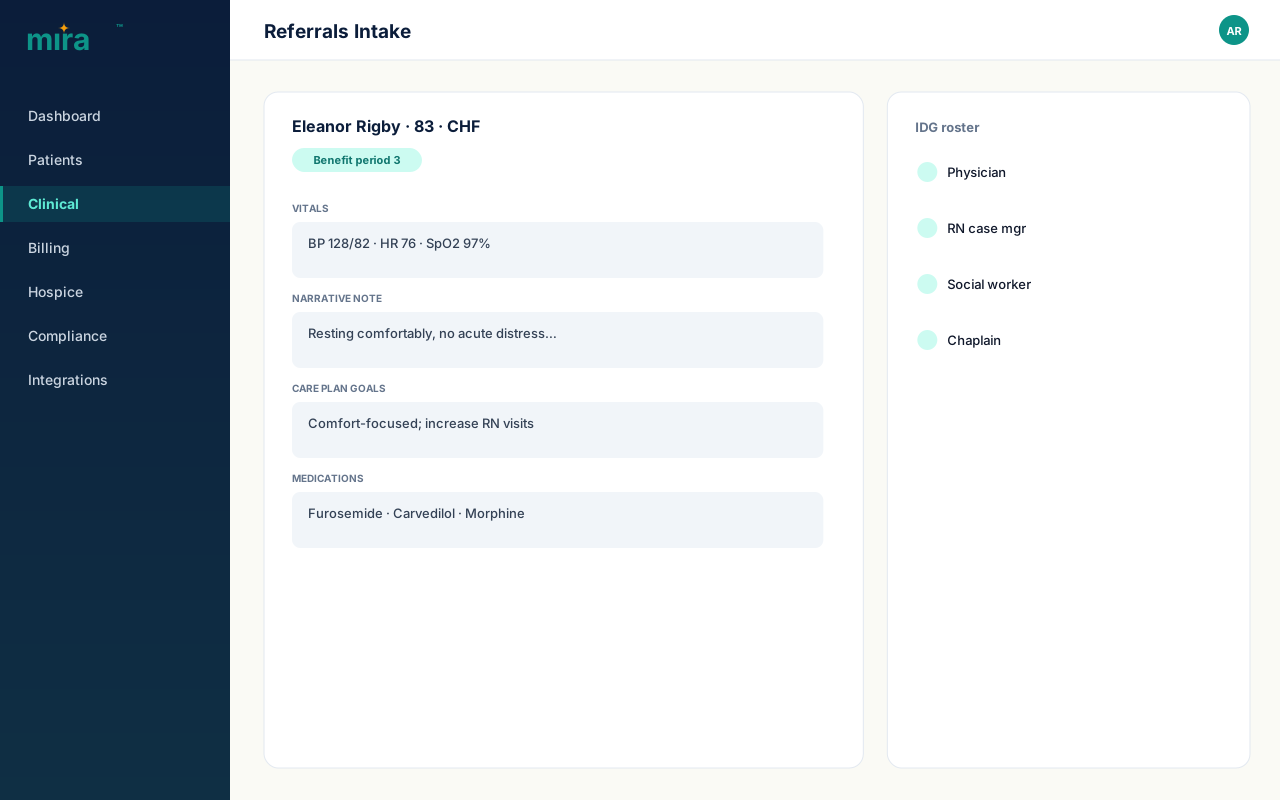 Mira product screenshot with numbered annotations. 1 2
 - 1 Single intake queue across phone, fax, EMR import.
- 2 Hand-off to billing happens with one click.
See the full clinical workflow in 60 seconds.
Admit → schedule → visit → chart → IDG → audit. Six steps.
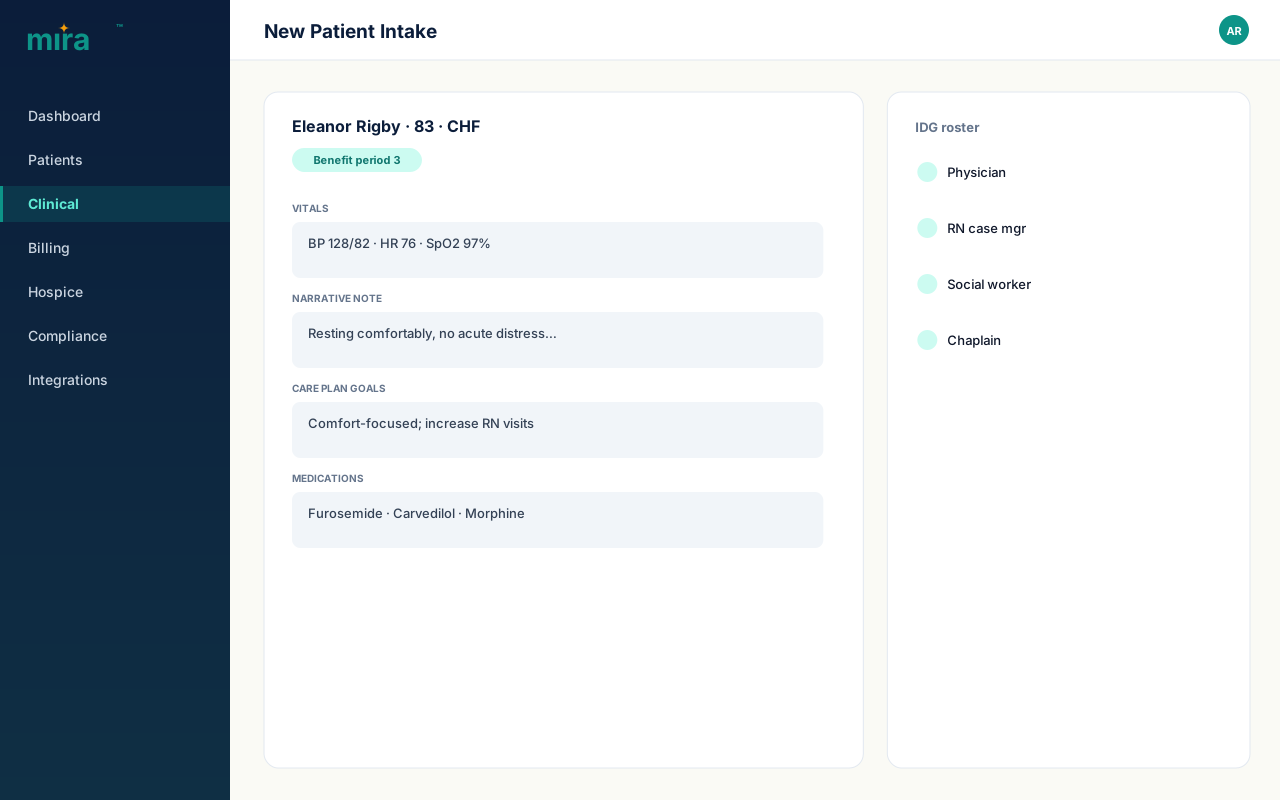
Admit a patient
Intake captures demographics, payer info, and the referring source in one form.
- 1Required fields highlighted; the rest can wait.
How Clinical fits the bigger picture.
Mira™ AI
The AI features run on the same clinical data — visit notes, care plans, medication records. The chart summarizer and IDG brief use data from this module directly.
Explore AI →Mira™ Billing
The referral handoff, prior-auth approvals, and completed visit documentation all feed directly into Billing. One source of truth means fewer denied claims.
Explore Billing →See it live
Book a 30-minute demo and we'll walk through the clinical module with your actual workflows — visit types, payer mix, team structure.
Book a demo →Ready to see Mira™ Clinical in your workflow?
We'll configure the demo around your visit types, payer mix, and team. 30 minutes — no slides.