
Platform · Billing
Mira™ Billing.
Claims, denials, appeals, clearinghouses, ERAs — the revenue cycle of hospice and home-health, end-to-end.
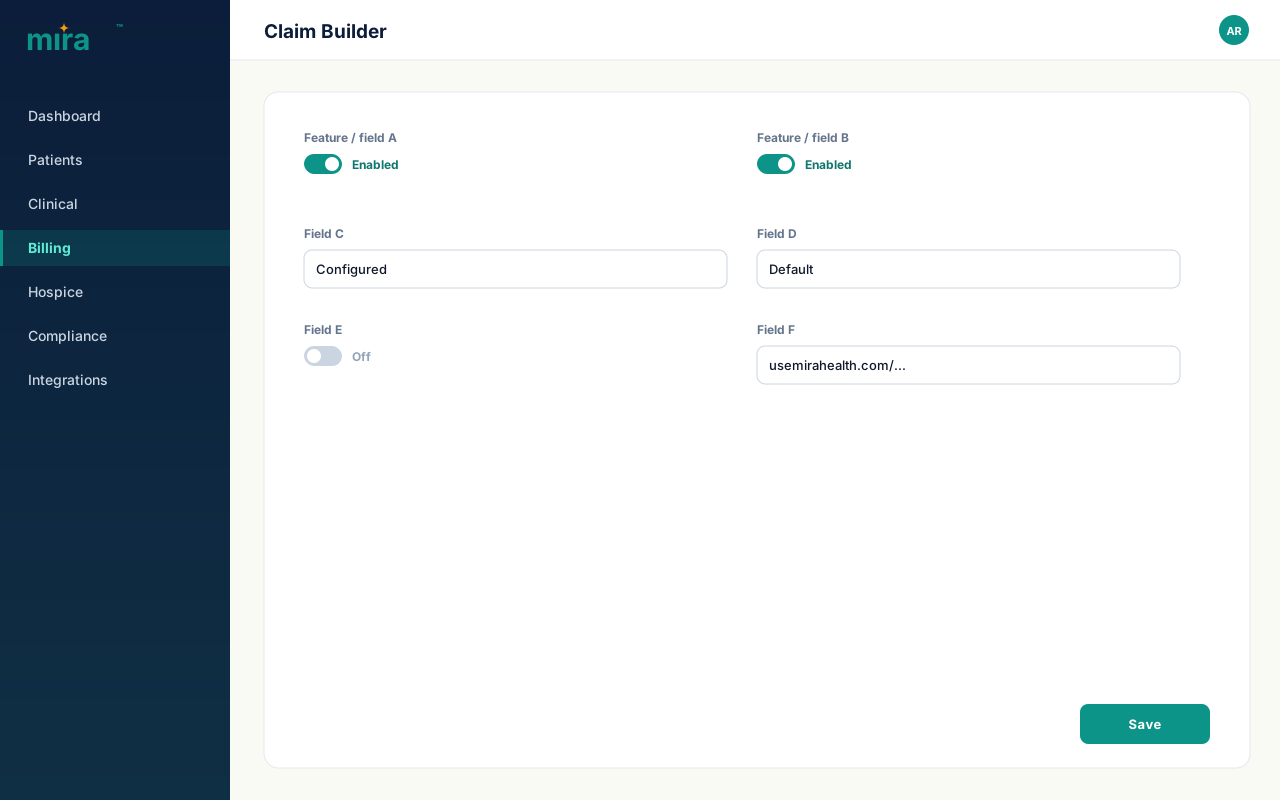 Mira product screenshot with numbered annotations. 1 2
 - 1 Auto-filled from the visit documentation.
- 2 Choose the clearinghouse per payer rules.
Revenue cycle software that understands hospice and home-health billing.
Hospice billing is not a simplified version of hospital billing — it is a distinct discipline. Benefit periods, NOE filing windows, continuous-care day rates, the Medicare hospice cap, Level of Care transitions, home-health RAPs and final claims: these are not edge cases that a general billing module handles with configuration. They are the core logic that Mira™ Billing was built around from day one.
The claim is assembled from the same patient record that clinical uses. Visit documentation, medication orders, and care-plan attestations feed directly into the claim builder. There is no data re-entry, no manual copy from a clinical system into a billing system, no version mismatch between what was charted and what was submitted.
- ✓ Auto-populated claims from completed visit documentation — no re-keying
- ✓ Clearinghouse routing per payer rules — Availity, Change Healthcare, and more
- ✓ Denial management workflow with status tabs and priority aging queue
- ✓ ERA auto-posting with line-item adjustment matching on ERA reason codes
- ✓ Real-time eligibility checks across multi-payer panels before submission
- ✓ AI-assisted appeal drafting using claim history and clinical notes
- ✓ Benefit period and NOE filing window tracking with automated alerts
- ✓ Managed-billing tier available for agencies that prefer full-service RCM
Claim built from the chart. Routed to the right clearinghouse automatically.
In most billing workflows the coder pulls up the visit note in one window and the claim form in another, transferring diagnosis codes, procedure codes, and service dates by hand. That transfer is where errors happen — and errors are where denials begin.
Mira™ assembles the claim from data that already exists: the visit documentation the nurse submitted, the care plan the physician signed, the medication orders that were reconciled. The claim builder surfaces any missing required fields and resolves coding suggestions before the biller clicks send. Clearinghouse routing — Availity for most commercial payers, Change Healthcare for others — is determined by the payer rules on file, not by someone remembering to check a spreadsheet.
- – Auto-populated from visit documentation, care plan attestations, and medication orders
- – Inline coding suggestions flagged before submission — not after rejection
- – Payer-specific clearinghouse routing enforced per organization rules
- – Submission confirmation with clearinghouse transaction ID retained on the claim record
Mira product screenshot with numbered annotations. 1 2 - 1 Auto-filled from the visit documentation.
- 2 Choose the clearinghouse per payer rules.
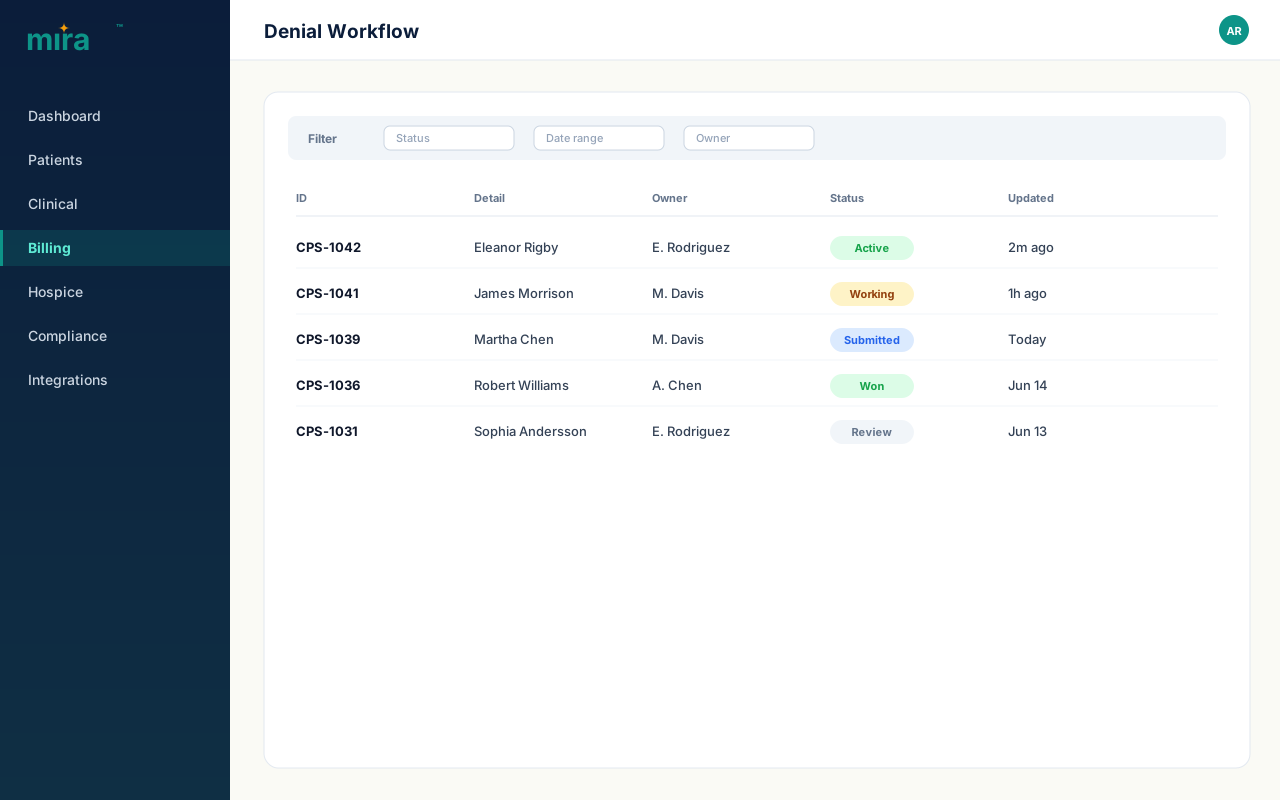 Mira product screenshot with numbered annotations. 1 2
 - 1 Status tabs: Pending, Working, Submitted, Won, Lost.
- 2 Aging queue surfaces the oldest unworked denials first.
Status tabs. Aging queue. Every denial worked in the right order.
A denial that sits unworked for 30 days is often unrecoverable. The payer's timely filing window closes, the appeal deadline lapses, and a legitimate claim becomes a write-off. The problem is rarely that billers don't know this — it's that a flat list of open denials gives no indication of which one to pick up next.
Mira™'s denial workflow organizes every denial through five status tabs — Pending, Working, Submitted, Won, Lost — so the whole queue has a shared, visible state. The aging queue within the Pending tab surfaces the denials closest to their appeal deadline first, so billers are always working in priority order. When an AI-drafted appeal letter is attached, the status moves to Submitted automatically.
- – Five status tabs: Pending, Working, Submitted, Won, Lost
- – Aging queue orders Pending denials by days remaining to appeal deadline
- – Denial reason codes mapped to common root causes with suggested remediation
- – Team-level denial rate dashboard — track improvement week over week
ERA arrives. Adjustments post automatically. Exceptions surface for review.
Manual payment posting — importing an ERA file, reading reason codes, applying line-item adjustments one by one — is one of the most time-consuming back-office tasks in billing. A busy agency processing hundreds of claims a week can spend 10-15 hours a week doing nothing but matching remittance lines to claim records.
Mira™ auto-posts ERA line items against the matching claim. When the payer's reason code and the expected reimbursement align, the adjustment posts without human intervention. When there is a discrepancy — an unexpected reduction, a partial payment with a non-standard reason code — the line surfaces in an exceptions queue for biller review. The result is a posting workflow that takes minutes, not hours, on most days.
- – Auto-post on clean ERA lines — no manual matching required
- – Reason code library covers ANSI X12 835 standard and payer-specific variations
- – Exceptions queue for discrepancies — one-click accept or flag for follow-up
- – Payment history visible on the claim record with ERA source document attached
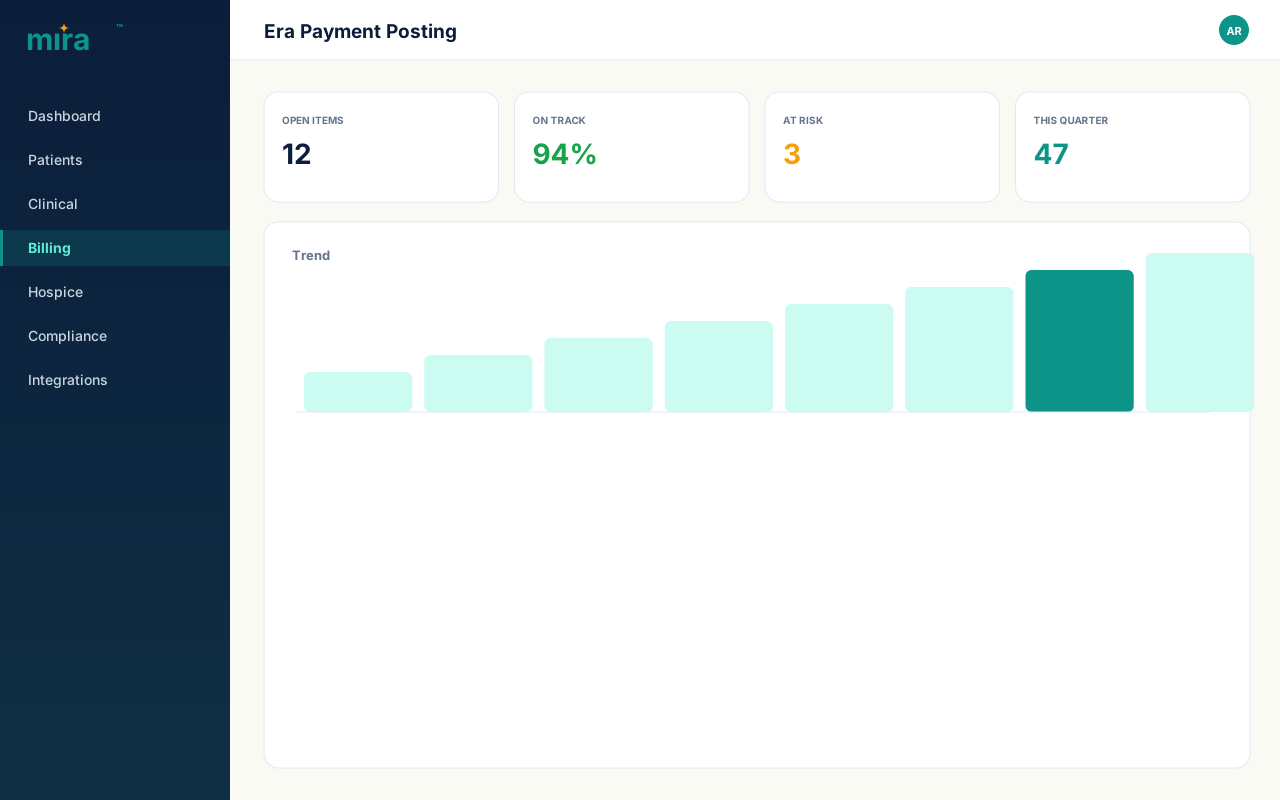 Mira product screenshot with numbered annotations. 1
 - 1 Auto-posts line-item adjustments matching ERA reason codes.
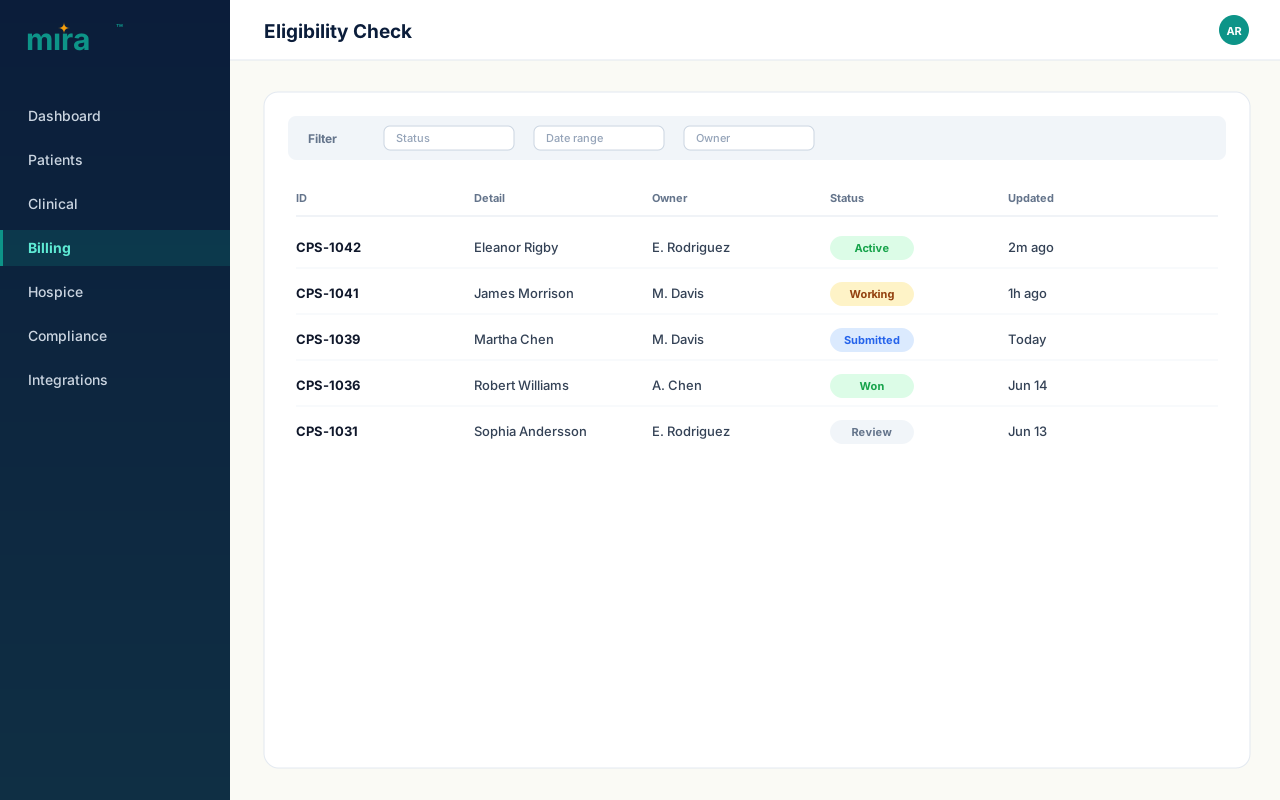 Mira product screenshot with numbered annotations. 1
 - 1 Real-time across Availity, Change Healthcare, payer portals.
Real-time. Multi-payer. Before the visit is scheduled, not after the claim is denied.
Insurance verification failures are the most preventable category of claim denials. A patient whose Medicare Part A benefit period has ended, whose secondary payer coverage lapsed, or whose plan requires a specific Level of Care will generate a denial on every claim until someone catches the eligibility gap. The catch usually comes from a denial — not from a check run before the visit.
Mira™ fires an eligibility check at referral intake and again 24 hours before each visit — automatically, without biller intervention. The check runs across Availity, Change Healthcare, and direct payer portal connections simultaneously. Results are normalized into a common format regardless of payer: active/inactive, benefit period dates, co-pay obligations, and known restrictions are all visible on a single screen.
- – Automatic check at intake and 24 hours before each scheduled visit
- – Multi-payer panel: Availity, Change Healthcare, and direct portal connections
- – Normalized result format — same layout regardless of payer response structure
- – Coverage gap alerts routed to the intake coordinator before service is rendered
Would you rather we just run it? That's what the Custom tier is for.
For most agencies, the billing module is something your team operates. But some agencies — particularly those in a growth phase, those navigating a staffing transition, or those with a small administrative team managing a complex payer mix — prefer to hand the revenue cycle to specialists.
The Custom tier includes Mira™'s managed-billing service: a dedicated billing team that operates the module on your behalf. Claims go out on time. Denials are worked within 48 hours. ERAs post the same day. You see everything in the dashboard — the work happens without you having to direct it. If you'd rather we just run it, see the Custom tier detail on the pricing page.
- – Dedicated billing team operating the module on your behalf
- – SLA: claims submitted within one business day of visit documentation completion
- – Denial worked within 48 hours of receipt — no aging queue backlogs
- – Full visibility in your dashboard — you see everything, we do the work
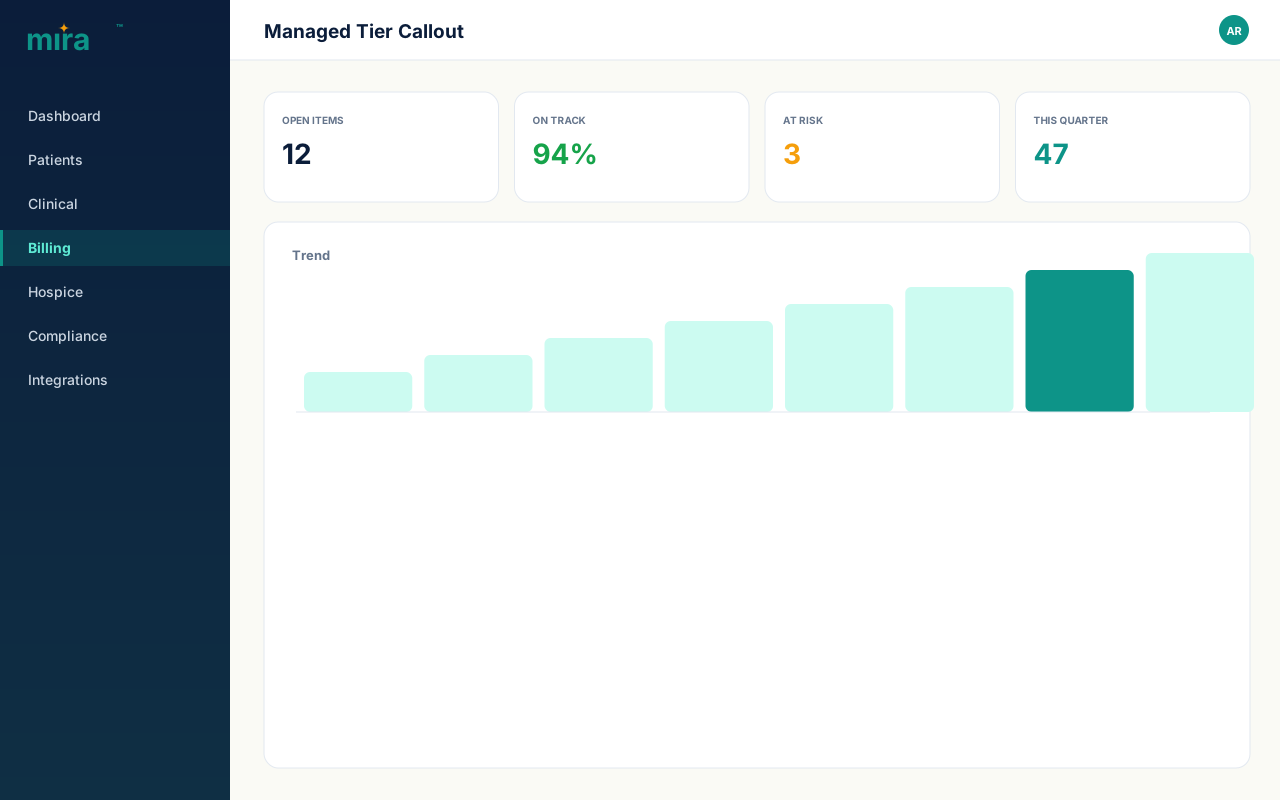 Mira product screenshot with numbered annotations. 1
 - 1 Custom tier: Mira's billing team runs the cycle for you.
Watch a claim move from build to paid in 75 seconds.
Patient context → build → eligibility → submit → status → denials → appeal. Seven steps.
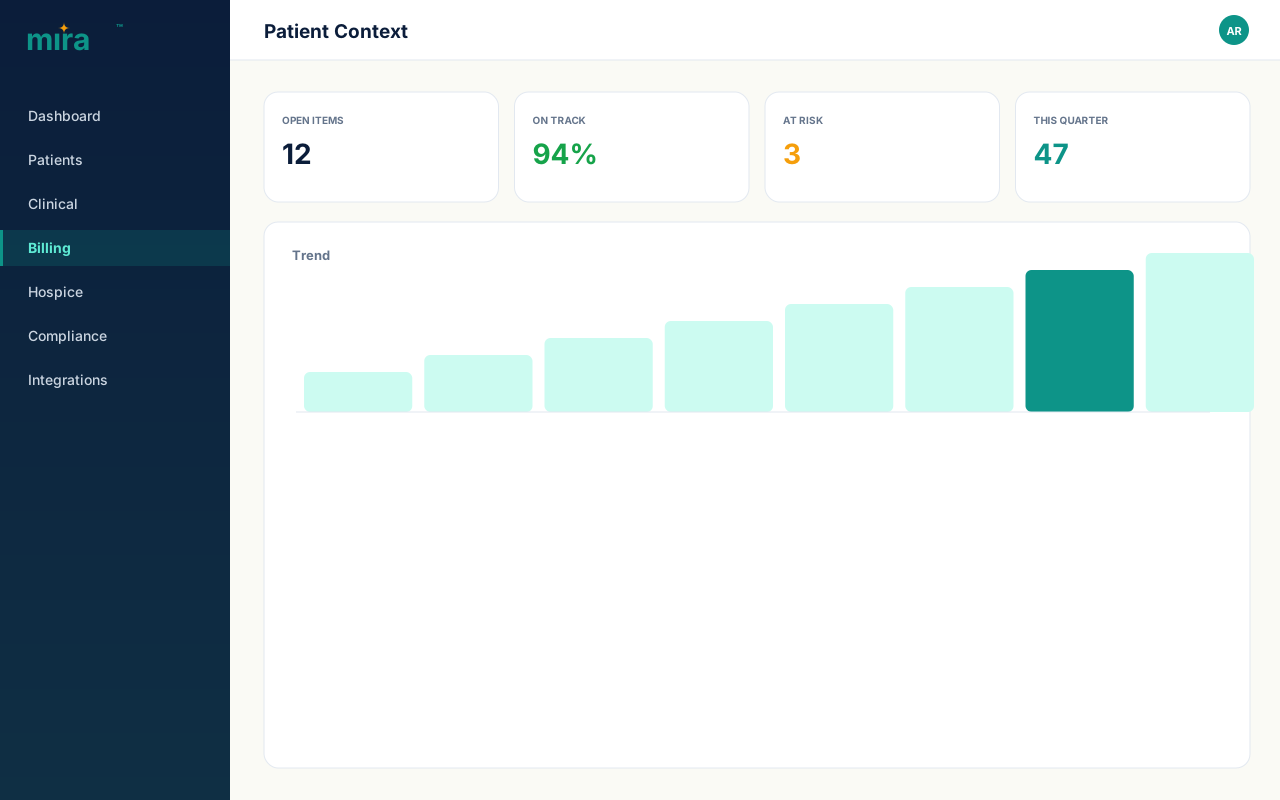
Patient context
Eligibility + payer + plan resolved before the claim is built.
How Billing fits the bigger picture.
Mira™ Clinical
Every claim starts with a completed visit note. Clinical documentation, care plan attestations, and prior-auth approvals all feed directly into the claim builder — no re-entry required.
Explore Clinical →Mira™ AI
The denial prediction model flags claims likely to be denied before submission. The appeal drafter uses claim history and clinical notes to write payer-specific letters in seconds.
Explore AI →See it live
Book a 30-minute demo and we'll walk through the billing module with your payer mix, denial categories, and team structure. Bring your current denial rate — we'll show you where Mira™ moves the needle.
Book a demo →Ready to see Mira™ Billing working your revenue cycle?
We'll configure the demo around your payer mix, denial categories, and team. 30 minutes — no slides.